 boddhicitta
An Alternative Interpretation of “Growing Up”
The “Fourth Version” Left in the Shadows
Songwriting is, at its core, a private conversation with the soul—a search for resonance between memory and present self. Recently, as I penned a series of songs for the Wang Fuk Court community, I endeavored to capture the warmth of everyday life and the intricate weave of neighborhood memories in three different languages: Mandarin, Cantonese, and English. Yet, tucked away at the bottom of my notebook, there lingered a “fourth version”—one I never dared to share.
Unlike its predecessors, which glimmered with nostalgia and hope, this version was drenched in cold, melancholic introspection. Its lyrics conjured barefoot boys, splintered cinema screens, and the suffocating sensation of breaking free from the adult world. I hesitated to complete it, wary it was too weighty, too raw, or lacked the requisite “positivity.” But as I revisited those lines, their honesty startled me. This was not a song of defeat, but the truest confession of what it means to grow.
This essay is dedicated to that song—and to every soul weary from the uphill journey of “growing up.” Here is my message: the sadness and anger you hide are not failings, but the only pathways to lasting inner peace.
The Paradox of Growth: Rediscovering Your Inner Child
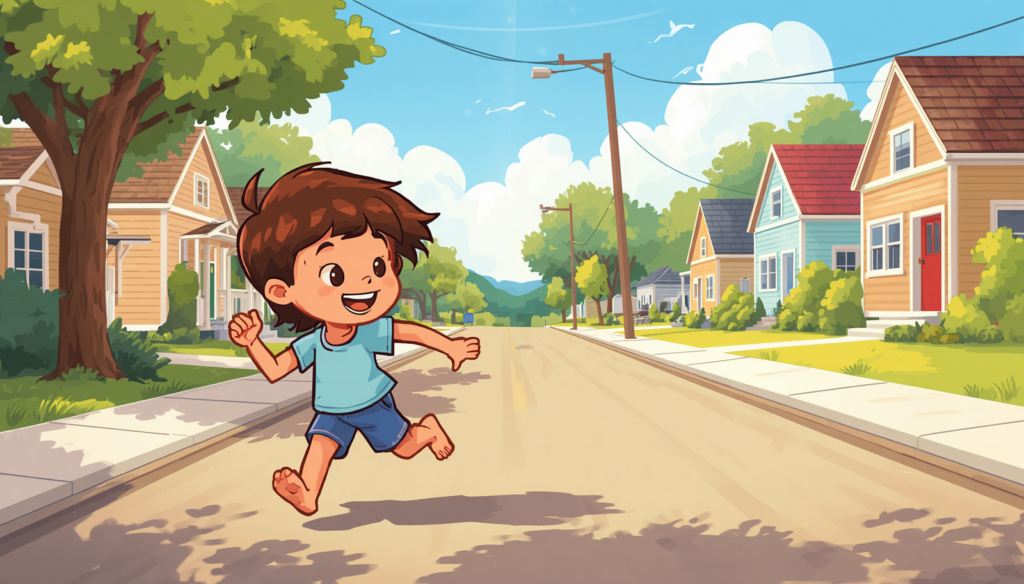
The song opens with: “Looking back on all those barefoot days, wasting time in summer streets… Never thought those simple, quiet hours would be the ones I’d miss the most.”

In the sunlit lanes of Wang Fuk Court—or in the corridors of your own childhood—there once existed a freedom in being “unproductive.” We ran barefoot, earth-caked and unashamed, knees adorned with fresh scabs. We cried when sadness struck and shrieked with uncontained joy. Our emotions—joy, anger, sorrow, delight—were delivered with unfiltered honesty. This was our “inner child” (赤子之心): pure, vulnerable, and unafraid.
But time, with its unyielding march, teaches us the unspoken rules of adulthood. We come to believe that maturity is synonymous with composure. We mute our feelings, conceal our wounds, and practice socially acceptable smiles in the mirror. We mistake this self-censorship for growth, when in truth it often signals the slow withering of our spirit.
Authentic maturity is not the abandonment of your inner child, but the courage to preserve that acute sensitivity within a complex world. Life is a perpetual work in progress; there is no final plateau called “adulthood” where pain ceases. To keep your inner child alive is to remain honest about your pain and desires—just as a child would.
Reclaiming the Right to Be “Unhappy”

In the unreleased fourth version, a refrain emerges—a mantra I found myself repeating:
You want to be listened to, you want to be understood,
There is nothing wrong with seeking comfort if you fall,
You have every right to blame the world, blame them all,
Crying your eyes out till you can laugh again,
Cursing the world till you can feel again,
Keeping your anger till you can love again,
Scorning everyone till you can find your peace again,
Asking for grace till you can breathe again.
To anyone navigating a low valley right now: stop forcing yourself to be relentlessly positive.

We live in an era addicted to curated happiness, where social feeds overflow with perfect lives and relentless optimism. We are told that to be anything less is to fail. Yet this song whispers a radical permission: If you fall, seek comfort. If you feel betrayed, you are allowed to feel resentment, to lay blame.
We are conditioned to be “sensible”—to swallow our grievances. But those stifled emotions do not disappear; they become knots in our bodies, shadows that haunt us at night. The core message of this song—and of this essay—is to reclaim your right to feel. Sadness, anger, frustration, and even resentment are not maladies to be eradicated, but vital elements of the human experience.
The Pendulum of Emotion: Growth Through Extremes
Perhaps the most radical—and healing—philosophy in this song is the belief in “moving from one extreme to the other.”
Why cry your eyes out? Because only after your tears are spent can laughter feel genuine. Why curse the world? Because, in releasing your suppressed rage, you rediscover your sensitivity to life. Why keep your anger? Because it is rooted in a fierce desire to protect what is beautiful; only by facing that fire can you learn to love more tenderly. Why scorn everyone? Because in that temporary isolation you reclaim autonomy and, ultimately, inner peace.
Imagine a pendulum: to reach “peace and love” on one end, you must permit yourself to swing into “anger and pain” on the other. This oscillation is not regression—it is emotional metabolism.

Many of us feel numb because we are afraid to swing, attempting to anchor ourselves perpetually in the neutral middle. We avoid the depths of pain, but likewise forfeit the heights of joy. True growth is nourished by feeling. Only after complete collapse can the rebuilt soul possess a deeper, more luminous resilience.
Living Is Feeling: Embrace the Whole Spectrum
The lyrics ask: “Life is already full of changes we can barely understand… Why must we be taught to stand in storms we never thought we’d see?”
Life, in all its volatility, is a sequence of tempests. We traverse shifting landscapes, ever seeking refuge. In the process, the greatest temptation is to go numb—to survive, but not to live.
Remember: To feel deeply—joy, rage, sorrow, and delight—is the only way to be truly alive.

If you are unmoved by the scent of rain-soaked earth, if you cannot weep for a tragedy onscreen, or if injustice no longer stirs you, then you are merely existing, not living. Those subtle, intense, sometimes uncomfortable feelings are proof that your soul is still in vibrant exchange with the world.
I have watched many, in pursuit of an “unshakeable” life, turn themselves to stone. A stone feels no pain, but neither does it bask in sunlight. We must remain creatures of flesh and feeling—proud of our capacity for emotional fluctuation. This is our greatest human asset.
The Courage to Live Substantially
The song’s closing lines offer gentle reassurance: “Being grown is not just losing youth, it’s learning inner peace… You will seek that quiet child within—and they’ll come back to you.”
The journey of growth is not about becoming strangers to ourselves, but about circling back to the child we once were. That child endures—in your reflection, your weary sighs, your spontaneous, stubborn smiles.
Time is irreversible; we cannot return to boundaryless summers. But we can choose how we inhabit the present.
Consider this your invitation: Summon your courage, be present, and live deeply—if only for this moment.
Let this mean:
- When you are wounded, refuse to rush out “I’m fine.”
- When anger rises, find a safe space to let it burn.
- When you ache to be heard, speak your truth clearly.
- When exhaustion overwhelms you, rest as a child would and ask the world for comfort.
Do not let “negativity” frighten you. As long as you are feeling, you are evolving. As long as you respond to the world, your heart will remain forever young.

The Heart as Home
Though this fourth song begins in sorrow, it ultimately points to a profound inner strength: “You will find in all this changing that your heart can be your home.”
Wang Fuk Court, like every place in this ever-shifting world, will change. Rules, circumstances, and companions will drift. But when you embrace your whole self—light and shadow alike—your heart becomes a harbor no storm can breach.

This is not an essay about perfection, but a manifesto for embracing your glorious imperfections. Live with more warmth, more honesty. In every emotional ebb and flow, discover the dignity and grandeur of being fully, unapologetically human.
Face your sorrow boldly—it is the secret passage to joy. Trust that behind your yearning to be seen lies a freedom and peace you have never known.
May we all find the courage to live as our most authentic, most radiant selves, even in the dazzling chaos of adulthood.


 meritokratias