 Banky Yeung
Netflix’s four-part limited series, titled ” Adolescence “ (translated as “ Chaotic Adolescence “), premiered in 2025 and focuses on the central theme of how a singular event can irrevocably alter the trajectories of those involved. This constitutes the captivating artistic essence of the production. When thirteen-year-old Jamie Miller is accused of murdering his classmate, Katie Leonard, the incident not only disrupts his own future but also creates profound repercussions throughout the lives of all connected to the tragedy. Family members, friends, the community, detectives, and psychologists – no individual is spared from the relentless transformation of their fate.
Acclaimed as a “paragon of visual storytelling” with an impressive 99% rating on Rotten Tomatoes, the series rapidly established itself as a significant milestone in television due to its audacious single-shot filming technique, exceptional performances, and deep exploration of the challenges faced by contemporary adolescents.
In light of the recent announcement regarding a second season, it is imperative to advance beyond ephemeral, trend-driven critiques and to fully contemplate the significance of the four episodes of ” Adolescence, ” which have already been completed. This analysis will explore the series through the perspective of its central theme: the effects of the event on the destinies of those involved. Specifically, we will investigate how the single-shot filming technique, akin to the seamless flow characteristic of a stage play, enhances the depiction of the characters’ reactions and attitudes when confronted with this pivotal event, as well as how these responses illuminate the profound influence that the teenage murder exerts on their lives.
Chapter 1: The Ripple Effect – Fate’s Ruthless Turn
Adolescence commences with a distressing police raid on the residence of Jamie Miller, an incident that signifies not only the fragmentation of a family but also foreshadows a series of consequential developments. Jamie, a thirteen-year-old yet to fully comprehend the ramifications of his actions, is abruptly transformed from an average student into a societal outcast charged with murder. His fate is commandeered by the scrutiny of law enforcement, the media, and the public, enveloping his future in a sombre pall.
The narrative delves into the shocking case, with surveillance footage documenting the individual’s actions. The emphasis swiftly transitions from “did he do it?” to “why did he do it?”, igniting an examination of motive. However, this is not merely a suspenseful mystery; rather, it constitutes an in-depth inquiry into the roots of juvenile crime. The repercussions of this event extend significantly beyond Jamie, affecting all those in his vicinity like a tempest. The series authentically portrays the subtle alterations in daily life, capturing the characters’ internal struggles and collapses with profound empathy.
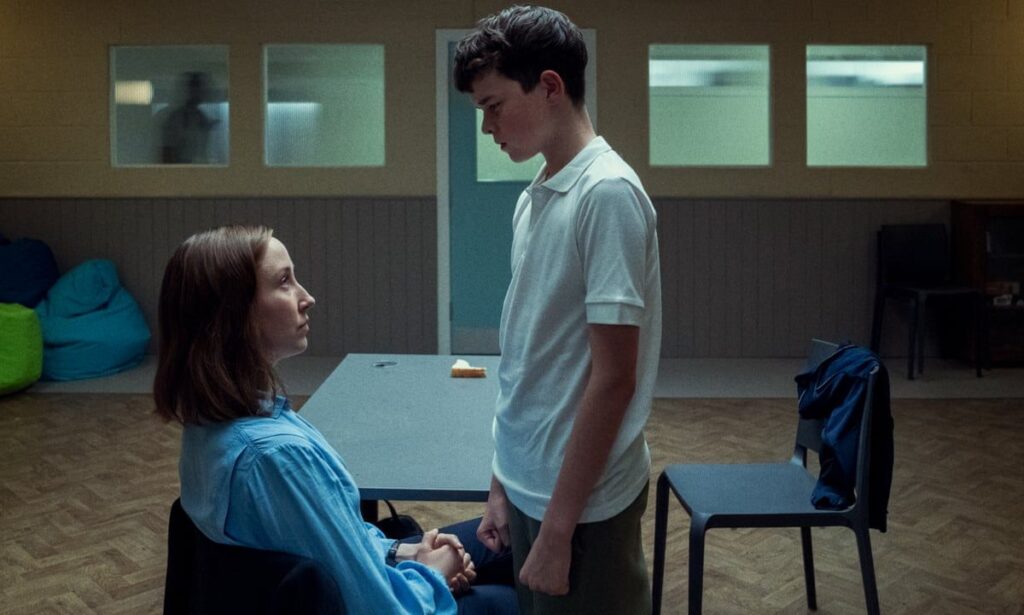
Adolescence: A Tragedy Unfolds – How One Act Shatters Lives in Netflix’s Riveting Series
Eddie Miller, portrayed with heartbreaking realism by Stephen Graham, emerges as one of the most poignant victims in this vortex of fate. A self-proclaimed dutiful father, Eddie witnesses his world crumble overnight. From the moment the police breach his home, his journey from shock to self-blame, and ultimately, to desperate attempts to salvage his family, becomes a tragic footnote in his life’s narrative. His career, his very existence, and even his self-perception are redefined by his son’s alleged crime. Though legally blameless, he is haunted by inner turmoil, questioning whether he could have better guided his child through the treacherous landscape of the digital age, preventing him from straying down a dark path. Simultaneously, Jamie’s mother and sister are plunged into the shadows of this tragedy, their lives consumed by fear, distrust, and the relentless gaze of the outside world. The warmth of their family unit is extinguished. Despite outward appearances of harmony, a chasm quietly forms between parents and children, “
The impact reverberates throughout the community. The school, as the epicenter of the event, becomes a focal point for media and public attention. The previously prison- like atmosphere of the campus is supplanted by tension and suspicion. Trust among students deteriorates, neighborly relations decline, and the harmony of the entire community is irrevocably disrupted. The school transforms from a nurturing environment into a cold, insular setting. Gray brick walls loom like cages, and the students appear to exist in a mental institution, engrossed in a world dominated by cell phones. Attention in the classroom wanes, and instruction falters. The classroom resembles a mechanical video conference, akin to prisoners who have lost their souls. Flickering surveillance lights serve as relentless wardens, confining the fate of all individuals involved. Student- teacher relationships grow distant, while competitive pressures mount. This institution, resembling an oppressive factory, molds children into a singular prototype, becoming a breeding ground for tragedy. Detective Luke Bascombe, during his investigation of the case, experiences repercussions in his personal life. He strives to remain composed when addressing issues concerning the school and community, yet an excess of calm can lead to indifference. This mirror reflects his relationship with his son, Adam. His heart is heavy, and his fate is also entangled in the case. Throughout the investigation, he discovers that the realm of contemporary teenagers extends far beyond his comprehension. Psychologist Briony Ariston, in her interactions with Jamie, endeavours to unravel his inner world while simultaneously reflecting on her own beliefs and human struggles, her fate deeply intertwined with the tragedy. She grapples with the challenge of employing professional psychological methods. Is the young perpetrator before her merely a case, or is he a person? If this scenario is viewed solely as a case, her work concludes, and some colleagues in the psychological field may perceive their professional duties as fulfilled; however, when the director crafts the character’ s personality, he intentionally preserves Briony’ s humanity. Does the completion of her work signify the conclusion of the case? In confronting Jamie, this living young man, how could he evolve into a murderer? Briony can assist Jamie, but the challenges faced by young individuals will persist unresolved, with only the lawbreakers subject to reform. Do young people genuinely wish to commit crimes? Can such actions be averted?
Adolescence, shaped by the ripple effect of this event, reveals the merciless nature of fate and the susceptibility of human nature. Each character discovers their role within this tragedy, inescapably engulfed by the torrent of destiny. This narrative approach, in which “the event impacts the fate of those involved,” serves not only as the structural essence of the series but also as the essence of its artistic expression. The four episodes are intricately linked, from the onset of the event to the progression of the investigation, culminating in the psychological analysis and familial repercussions, thereby presenting a comprehensive depiction of the case and enabling the audience to gradually uncover the truth surrounding the child’s fall. Through the meticulous portrayal of each character’s fate, the series illustrates that Jamie’s conduct constitutes not merely a personal error, but a collective failure of society, family, and the educational system. In the omnipresent gaze of the Internet and the pressures of contemporary reality, adolescents endure profound anxiety and self-doubt. This campus, akin to a desolate locale, emerges as the inception of their psychological unravelling. This theme pervades the entire series and is integral to comprehending both the artistic value and social significance of Adolescence.
Chapter 2: A Technological Leap – The Immersive Experience of a Single Take
The technological innovation of Adolescence constitutes one of the cornerstones of its success, with the single-shot filming technique being particularly prominent. While a single shot may not represent a groundbreaking innovation, the continuous development of recording equipment enables the presentation of diverse shooting concepts more effectively. The unedited presentation of 50 to 60 minutes per episode is exceedingly rare in television series. This audacious endeavour not only enhances the fluency of visual language but also provides an unprecedented sense of immersion for the audience. The series transcends a mere leisure activity following dinner; even when one is at home, considerable focus is mandated for a minimum of 50 minutes per episode to experience it in its entirety. The director’s shooting direction is profoundly aligned with the theme of “the event affects the fate of those involved,” allowing the audience to engage closely with the emotional fluctuations and fate changes of the characters, thereby feeling the sense of helplessness experienced by contemporary youth in the “always online” culture. The entirety of the four episodes is filmed in a single shot, featuring a concise yet striking structure. This not only showcases an elevated level of technical difficulty but also presents complex issues in an intuitive manner, thereby garnering widespread acclaim.
The commencement of the inaugural episode exemplifies a masterful single shot. The tumult of the police conducting a raid on Jamie’s residence, followed by the apprehension of both Jamie and Eddie and their subsequent transportation to the police station, crafts a coherent narrative that positions the audience at the heart of the event. This immersive experience enables viewers to profoundly comprehend Jamie’s trepidation, Eddie’s powerlessness, and the poignant moment of familial disintegration. The urgency of time, coupled with the suppression of emotions, is accentuated through the fluidity of the lens, creating a sensation where the audience appears to breathe and grapple with the characters. The tremulous lens draws near to Jamie’s terrified gaze, while the close-up encapsulates his panic, as if ensnaring the audience within a chaotic vortex. The pervasive onslaught of online commentary looms like a shadow, imposing an intangible weight upon viewers. Director Philippe Barantini maintains his distinctive approach, characterised by a tightly-knit and coherent rhythm that compels the audience to remain engaged, inhibiting any impulse to fast-forward for fear of overlooking essential details.
A single shot represents not only a technological breakthrough but also a narrative persistence, which has revolutionized the possibilities of television series. This innovation establishes a tight rhythm for the series and facilitates a natural progression, while simultaneously imposing exceptionally high demands on the actors’ performances. Each scene must sustain emotional coherence and authenticity over an extended period, thereby rigorously testing the actors’ skills. Television series differ from films in that they require an independent rhythm within each episode. The movement of the camera and the design of the scenes necessitate meticulous arrangement. The dynamic visuals from the first and second episodes are seamless and unobstructed, showcasing remarkable technical standards, particularly prominent in the second episode. The camera glides across the campus reminiscent of a phantom, the whistle resonates as harshly as a prison command, and the footsteps echo like shackles scraping against the ground. The ambient soundscape constructs a sombre atmosphere; furthermore, in the third episode, the dialogue scene between Jamie and Briony is entirely captured in a single shot, effectively conveying the transition from silence to eruption, with the unedited presentation enhancing the authenticity of the characters’ inner conflicts. Another illustration occurs when the camera shifts to the hardware supermarket in the fourth episode, where the focus transitions from the shelves to the staff, with dim lighting outlining rugged contours. The documentary-like quality evokes a profound understanding of how the despair of society’s underclass intertwines with the protagonist’s fate, thus illuminating the alienation of interpersonal relationships in the age of the Internet.
The director’s shooting choices not only deepen the theme of the series but also enhance its artistic merit. The single-shot format facilitates an undistracted focus on the characters’ perspectives and the environmental atmosphere, devoid of editorial interruptions. This method allows viewers to confront the realities of juvenile crime and the influence of the Internet, establishing a benchmark for film and television production. Through a single shot, the audience is able to explore the innermost thoughts of the characters and grasp the gravity of their circumstantial changes. This immersive experience enables ” Adolescence “ to surpass the conventional framework of television series and transform into an artistic exploration of visual and emotional synthesis, eliciting a connection with the adversities faced by youth.
Chapter 3: The Soul of the Actors – The Shining Stars of Owen Cooper and Stephen Graham
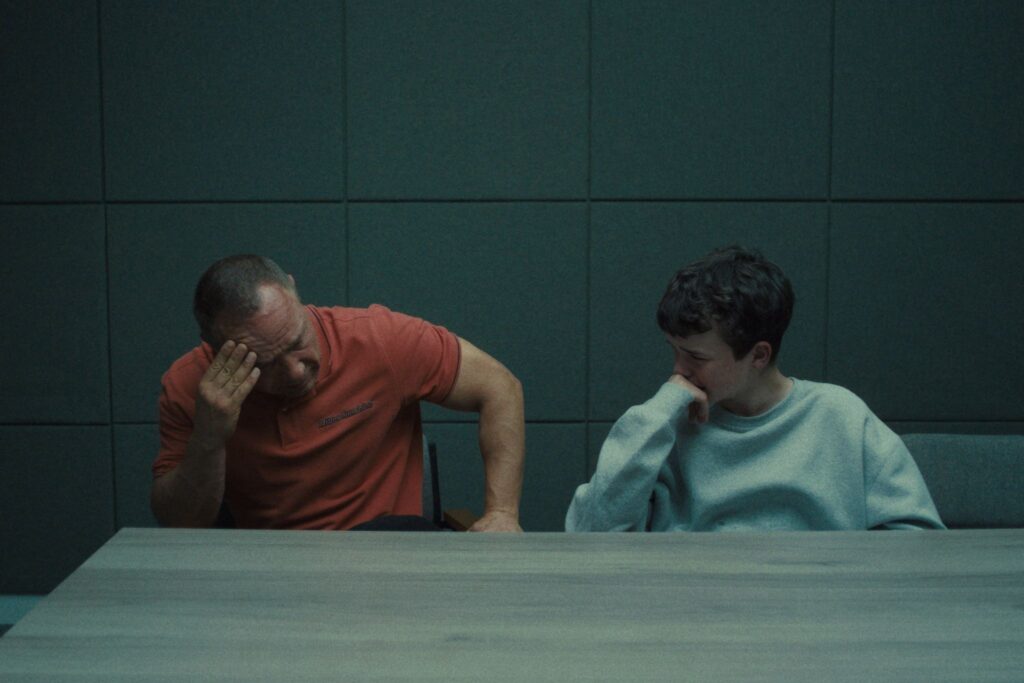
In Adolescence, the performances of the actors are the soul of the series, and the performances of Owen Cooper and Stephen Graham are particularly outstanding. Through their superb acting skills, they interpret the theme of “the event affects the fate of those involved” vividly and profoundly present the struggles of young people in the identity crisis and the lack of family support.
Owen Cooper, a mere 15 years old, delivers a performance of remarkable maturity and depth as Jamie Miller. In his debut role, Cooper masterfully portrays Jamie’s fear, confusion, and inner turmoil. Particularly striking is his interaction with psychologist Briony in the third episode, where Cooper reveals the character’s complexity – a victim and perpetrator, yearning for understanding yet terrified of facing the truth. The vulnerability and struggle etched in Cooper’s eyes allow the audience to feel the pain of a young life irrevocably altered by tragedy. This single-scene dialogue, carried solely by the two actors, is a tour-de-force. Cooper, despite his youth, commands the atmosphere with seamless emotional transitions, showcasing an astonishing depth of talent. However, his raised voice and questioning of Briony are not mere defiance, but an attempt to seize a semblance of control in an involuntary encounter. He is not willingly undergoing psychological evaluation, but rather forced into this situation, making his outbursts a form of self-preservation, a desperate plea for genuine care rather than clinical analysis. Briony’s detached and utilitarian approach, viewing Jamie as a task to be completed, lacks true empathy. She focuses solely on extracting information to achieve her professional goals, a mechanical response that Jamie keenly perceives, making their confrontation all the more authentic. His reaction exposes the traits of a bullied individual, a long-neglected teenager struggling under pressure, rather than intentional malice.
Stephen Graham’s portrayal of Eddie Miller is equally unforgettable. As a seasoned actor, Graham embodies Eddie’s complex emotions, from shock and self-blame to desperate attempts to salvage his family. His performance is nuanced, each glance and gesture revealing the character’s inner world. In the poignant final scene of the first episode, Eddie sits alone on a bench outside the police station, head bowed, staring at his hands. Graham, through silent physical language, captures the father’s collapse and helplessness with profound impact. He showcases subtle layers under the challenge of a single take. The final scene of the fourth episode, set in his son’s room, conveys a silent pressure and confusion that strikes at the heart, interpreting the father’s powerlessness under the breakdown of family support. In the supermarket scene, his struggle is intertwined with the mechanical movements of the staff. The low-angle shot looks up at the trembling hands of the staff, highlighting the helplessness and resonance of fate, reflecting his inability to understand Jamie’s plight in the Internet age. Eddie’s education of Jamie emphasizes respect and responsibility, making Jamie’s behavior seem more like an environmental influence rather than an internal hostility.
Erin Doherty, as psychologist Briony Ariston, adds a touch of humanity to the series with her understated yet profound performance. In her dialogue with Jamie, she attempts to decipher his motives while also serving as a window for the audience to understand his inner world. Doherty’s performance is nuanced and restrained, her character struggling between professionalism and humanity, a conflict that also entangles Briony’s fate in the event. However, this meeting is an involuntary task for her, and her response seems formulaic, lacking real emotional investment. She seems to be performing her duties, trying to obtain the necessary information from Jamie, rather than establishing a real connection, which makes her restraint seem cold and alienated. The camera focuses on the slight tremor of the corners of her mouth, revealing fragility under professionalism, forming an invisible confrontation with the security guard and Jamie. Her calmness contrasts sharply with Jamie’s outburst, highlighting the adult world’s neglect of the real needs of young people.
The outstanding performances of the three leading actors complement the single-shot technique perfectly. They maintain emotional coherence in long, unedited shots, portraying the characters’ fate changes vividly and movingly. This combination of superb acting and thematic depth makes Adolescence a masterpiece that emphasizes both acting and art. As an important place for the development of drama, the United Kingdom has the absolute ability to present stage images on the television screen.
Chapter 4: The Depth of the Theme – A Profound Reflection on Social Issues
Adolescence is not only a crime drama but also a profound reflection on contemporary social issues. Through the theme of “the event affects the fate of those involved,” the series explores issues such as the manosphere, the impact of social media, and adolescent mental health, revealing how these problems fester among young people, ultimately leading to tragedy, and presenting the audience with a mirror reflecting the plight of modern teenagers.
The series places Jamie’s behavior in a broader social context, exploring how the manosphere subtly influences his worldview. However, Jamie did not truly internalize the manosphere’s objectification of women. His behavior seems more like following the crowd, influenced by the online environment rather than deeply rooted beliefs. His father, Eddie, gave him a family education that emphasized respect and responsibility, making his behavior towards Katie difficult to simply attribute to hostility towards women, but more like a result of being pushed by the surrounding noise. Jamie’s gaze intersects with Briony’s, with a certain sense of oppression, but this is not intentional objectification, but rather an attempt to show a bluffing posture under pressure. His violence is more like a loss of emotional control rather than a systematic hostility towards gender, which is somewhat different from the extreme ideology of the manosphere. At the same time, the duality of social media is fully revealed in the play. It is both a space for young people to express themselves and brings the oppression of bullying and false images. Online abuse and onlookers exacerbate Jamie’s sense of isolation. When virtual standards replace real support, he has nowhere to vent, and finally, under the encouragement of his peers, he can only resort to violence. This emotional collapse stems more from the powerlessness of being excluded rather than active hostility.
Adolescent mental health is another core concern of the series. Jamie’s behavior is not pure evil, but the product of society, family, and education’s long-term neglect of his needs. The campus is as oppressive as a prison, the youth in the community spray paint on work vehicles, and the emotional numbness of the staff in the hardware supermarket reflect how the despair of the social bottom erodes young minds. The series does not portray Jamie as a demon but sees him as a victim of the environment. He was not born that way, but his long-term experience of being bullied has made him accumulate anxiety and inferiority in his heart. If anyone had noticed Jamie’s condition early on, the tragedy might not have happened; drama has always been about raising questions, allowing us to find possibilities for solutions in life; drama also suggests that prevention is better than cure. Jamie’s thoughts have been rooted in extreme online culture, and even made extreme acts of murder, which is no longer a treatable stage, but must bear legal responsibility for the lost life.
Jamie’s dialogue with Briony is not voluntary, but an imposed task, which makes his shouting a kind of resistance, trying to gain a little presence in front of indifferent adults. However, Briony, as a psychologist, regards this as an assessment that must be completed. Her attitude lacks empathy and only aims to achieve analytical goals. This mechanical interaction deepens Jamie’s sense of isolation, highlighting his characteristics as a bullied person rather than the nature of a perpetrator. This perspective calls for reflection on prevention rather than simple condemnation. The plot reveals the beginning and end of the event from the first episode, gradually analyzing the causes, and tells the story of juvenile crime, the impact of the Internet, and the lack of education in a profound and non-preachy way. Briony’s character is particularly critical. Her indifferent attitude reflects the adult society’s misjudgment of the needs of young people, and her fate is therefore closely intertwined with these issues.
This in-depth analysis of social issues elevates Adolescence beyond a typical crime drama, transforming it into a work of profound significance. It reveals how adolescent problems have shifted from external conflicts to internal crises, becoming increasingly difficult to prevent, and poses thought-provoking questions: How can parents act before tragedy strikes? What support can schools provide? Can an education system resembling a prison prevent disaster? How can psychologists balance professionalism with humanity? These questions challenge us to rebuild parent-child connections, update educational approaches, and redefine our expectations of young people. It not only presents Jamie’s personal tragedy but also sparks collective reflection on social, family, and educational responsibilities. This thematic depth, combined with the narrative of “the event affecting the fate of those involved,” elevates the series to new heights in terms of artistic and real-world significance.
Adolescence stands as a landmark achievement in the television landscape of 2025. With the core theme of “the event affecting the fate of those involved,” it presents a profound exploration of humanity and destiny through a perfect fusion of technological innovation, actor performance, and thematic depth. Adolescence is not only an excellent TV series but also an art work with far-reaching influence. It reminds us that behind every event, there is a group of people whose lives are changed by fate. Life is like a single shot. Jamie’s tragedy may stem from being misled by the environment rather than being inherently evil. This play is like a microcosm of reality, raising questions through stories and inspiring the audience to think. Through Jamie’s experience, the series calls for attention to adolescent mental health, reflection on the negative factors of contemporary culture, and a re-examination of the roles of education and family. With sincere emotion and keen insight, it portrays the struggles of young people in a chaotic era and reminds us with brutal truth: understanding and change begin with the courage to face the problem. This insight into humanity and society allows Adolescence to leave a strong mark in television history, not only entertaining the audience but also inspiring thought, becoming a timeless classic worthy of careful appreciation by everyone who cares about the next generation.


 henry
henry


