 admin
admin
Editor’s Letter:
In a world obsessed with calorie apps, macro splits, and the relentless pursuit of instant results, we often forget: the human body is not a mere ledger of numbers, but a living symphony of energies. When your weight-loss journey stalls, or the fatigue lingers despite every effort, perhaps the solution lies not in the gym’s latest innovation, but in the ancient wisdom that has ripened for millennia on either side of the mighty Himalayas: India’s Ayurveda and China’s Traditional Chinese Medicine (TCM). Though separated by snow-capped peaks, both traditions arrive at a singular, profound insight: weight gain is not simply the result of “overeating”—it is a reflection of an inner imbalance, a smoldering digestive fire, and the silent accumulation of metabolic “residue.”
Join us as we traverse this sacred terrain. By harmonizing the diagnostic brilliance of these twin disciplines, we unveil a holistic, hunger-free renaissance for your metabolism—an elegant rebirth from the inside out.
Chapter I: Ancient Paradigms—Why “Gaining Weight by Drinking Water” Isn’t a Myth

In Eastern medicine, weight gain is never a sterile equation of calories. It is a symptom of disrupted function—a story written in the language of energy and flow.
1. Ayurveda: Rekindling the Fire (Agni) and Dissolving the Waste (Ama)
Ayurveda teaches that robust health hinges on Agni—the vital digestive flame. When Agni blazes, food is transmuted into pure vitality (Prana) and luminous essence (Ojas). But let Agni falter—dampened by icy drinks, erratic meals, or chronic stress—and digestion falters, leaving behind Ama: a viscous, toxic residue. This “sludge” obstructs internal pathways, quelling metabolic vigor. Thus, Ayurvedic slimming is not about deprivation; it is the art of “rekindling the fire to incinerate the residue.”
2. TCM: The Spleen’s Artistry and the Tyranny of Dampness
In TCM, the metabolic spotlight falls on the Spleen and Stomach—guardians of “Transformation and Transportation.” When the Spleen weakens (think: raw foods, excessive worry), its processing power falters, and fluids stagnate. These congeal into Dampness, which matures into Phlegm—the very substance of unwanted fat. “The heavy person has much Phlegm,” intones a TCM proverb, echoing the belief that excess weight is the legacy of metabolic inertia.
Chapter II: The Diagnostic Blueprint—Unlocking Your Personal “Lightness Code”

True transformation begins with self-awareness. By synthesizing Ayurvedic and TCM archetypes, we reveal three foundational metabolic profiles:
Archetype A: The Heavy & Stagnant (Ayurveda: Kapha / TCM: Damp-Phlegm)
- Profile: Solid build, soft tissue, water retention, and persistent fatigue. Steadfast but sluggish. Weight clings despite restraint. Tongue is coated, limbs feel leaden at dawn.
- Diagnosis: Excess Water and Earth elements. Agni nearly extinguished by Dampness.
Archetype B: The Intense & Stressed (Ayurveda: Pitta / TCM: Liver Qi Stagnation with Heat)
- Profile: The quintessential “stress eater”—voracious, prone to emotional binges, with a fiery core. Inflammation, abdominal weight, and firm musculature dominate.
- Diagnosis: Rampant Fire element and stagnant Liver Qi. Overheated “Stomach Fire” triggers insatiable hunger.
Archetype C: The Erratic & Deficient (Ayurveda: Vata / TCM: Spleen Qi Deficiency)
- Profile: “Skinny-fat,” with erratic bloating, dryness, and digestive unrest. Appetite swings, with weakness or dizziness during calorie restriction.
- Diagnosis: Unstable Air element. Spleen Qi depletion prompts the body to hoard fat as a defensive response.
Chapter III: The Alchemical Kitchen—Six Tastes, Thermal Wisdom, and the Modern Table
Ayurveda classifies all foods by Six Tastes: Sweet, Sour, Salty, Pungent, Bitter, and Astringent. The slimming secret? Diminish the first three (builders), amplify the latter three (purifiers).
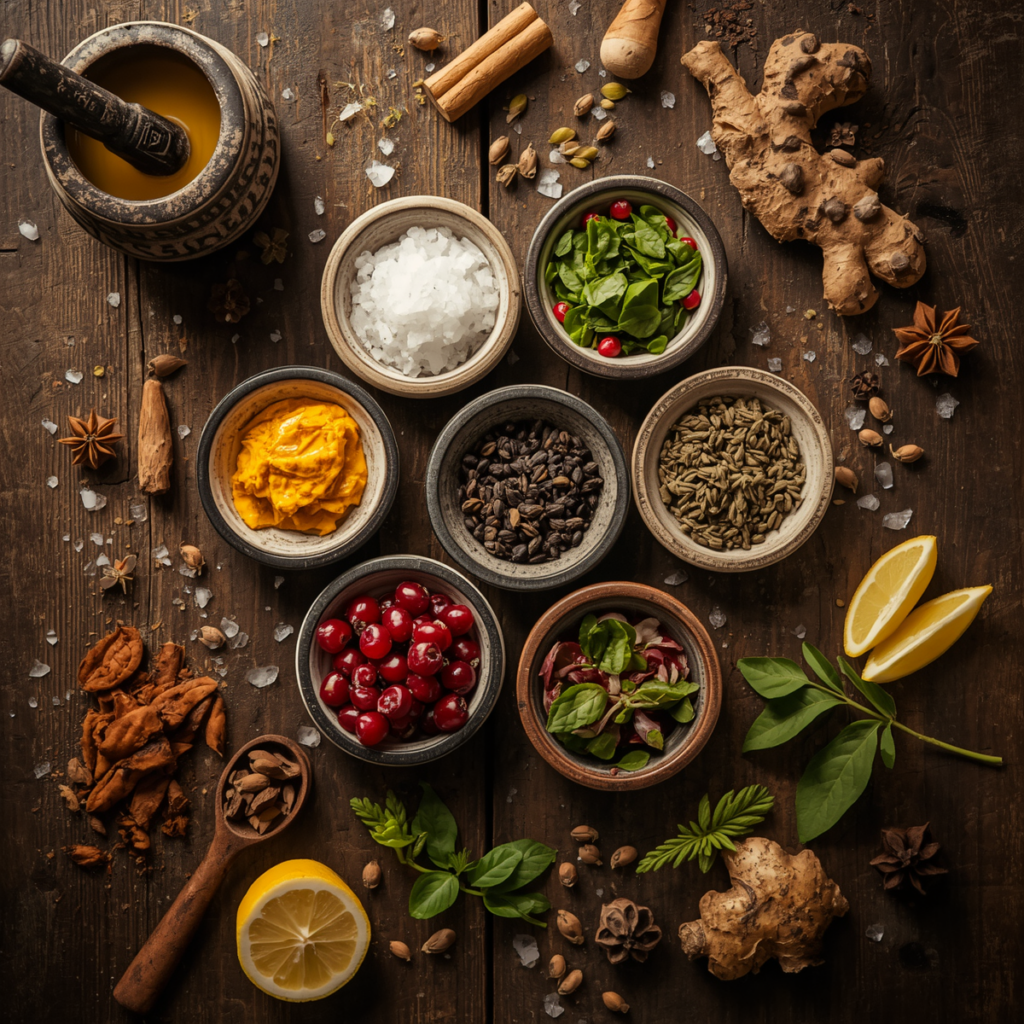
- Pungent: (Ginger, Black Pepper) Stimulates, disperses stagnation, and rekindles Agni.
- Bitter: (Kale, Turmeric, Bitter Melon) Detoxifies, cools inflammation, and “scrapes” away Dampness.
- Astringent: (Beans, Pomegranate, Apple) Absorbs surplus fluids, providing a gentle drying effect.
The Shared Apothecary:
- Turmeric: The “golden panacea,” revered for dispelling stagnation and inflammation.
- Cumin: A digestive powerhouse that relieves “Food Stagnation.”
- Hawthorn Berry & Lotus Leaf: TCM mainstays that mobilize Spleen energy and melt “flesh accumulation,” in harmony with Ayurvedic astringency.
Chapter IV: Archetype-Specific Meal Rituals—A Day of Metabolic Renewal
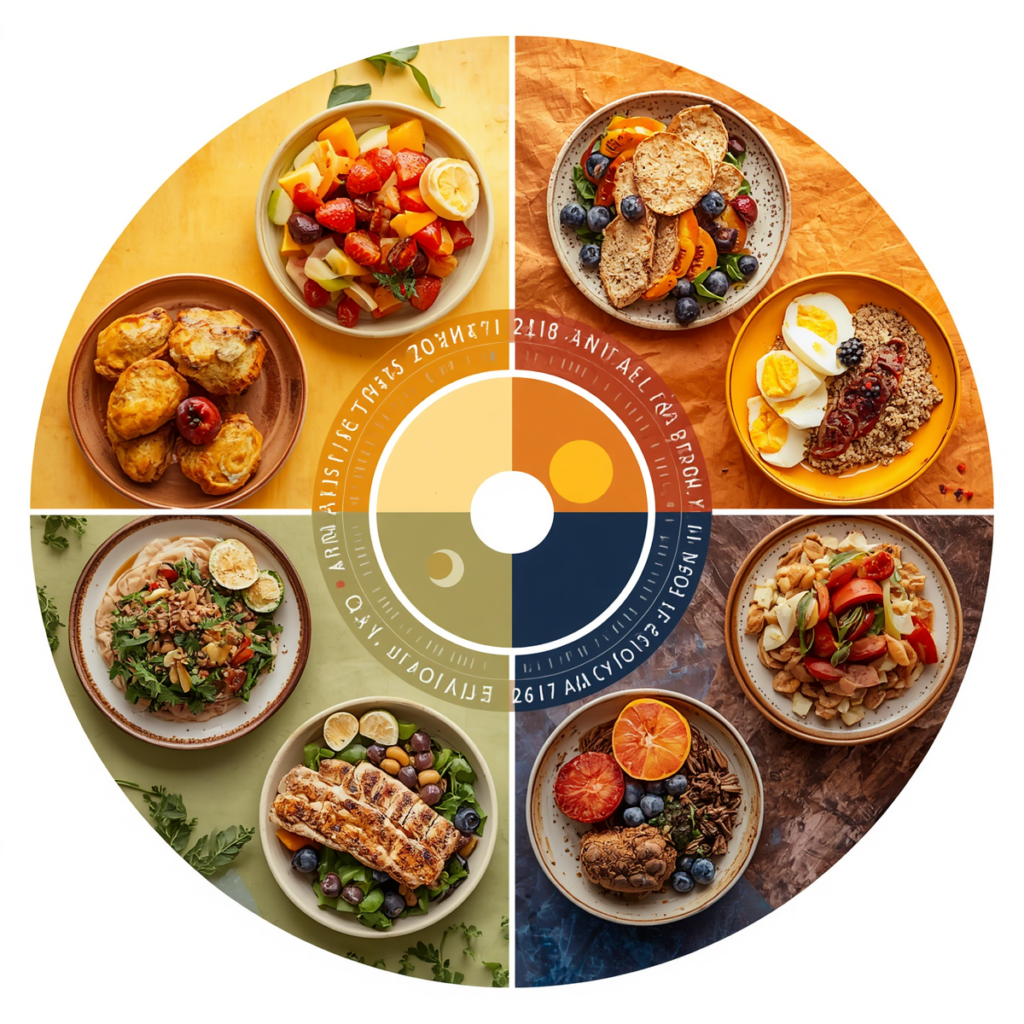
Archetype A: The Kapha/Damp-Phlegm—“Light, Warm, Stimulating”
- Guideline: Eschew cold drinks and dairy. Stoke the digestive fire.
- Morning: Steaming ginger water with black pepper.
- Breakfast: Poached apples/pears with clove and cinnamon.
- Lunch: Spiced mung bean dhal, bitter melon, lean protein, and a touch of rye or brown rice.
- Dinner: Steamed broccoli and asparagus with fresh ginger.
- Booster: Daily “Hawthorn & Lotus Leaf Tea.”
Archetype B: The Pitta/Stressed—“Cooling, Smoothing, Stabilizing”
- Guideline: Avoid stimulants and alcohol. Cool the fire, pacify the Liver.
- Morning: Room-temp coconut or mint water.
- Breakfast: Barley-lotus seed porridge (unsweetened).
- Lunch: Quinoa salad with cilantro, cucumber, and tofu.
- Dinner: Celery-lily bulb stir-fry with steamed sweet potato.
- Booster: Afternoon “Rose & Bergamot Tea.”
Archetype C: The Vata/Qi Deficient—“Nourishing, Warm, Grounding”
- Guideline: Never skip meals. Embrace warmth and moisture.
- Morning: Warm water with ghee.
- Breakfast: Yam-cinnamon oat porridge.
- Lunch: Kitchari with pumpkin and carrots.
- Dinner: Stewed root vegetables with warming spices.
- Booster: Evening mugwort foot soak to draw “False Heat” downward and optimize metabolism.
Chapter V: The Aesthetics of Living—Rituals Beyond the Plate

1. Solar Synchrony:
Ayurveda prescribes that between noon and 1 p.m., your digestive fire is at its zenith—consume the lion’s share of daily calories then. TCM concurs: after sunset, “Yang energy retreats,” and late-night meals burden the Spleen, breeding Fat and Phlegm.
2. The Hydration Art:
Reject iced water. Cold beverages constrict stomach vessels, dousing Agni. Warm water (Arka) gently irrigates channels, flushing away “Ama.”
3. Mindful Eating:
TCM values silence at the table; Ayurveda advocates savoring color, aroma, and texture. Unplug gadgets—this soothes the vagus nerve, ensures optimal enzyme release, and halts “false hunger” triggers.
Chapter VI: Epilogue—Weight as a Reflection of Inner Grace

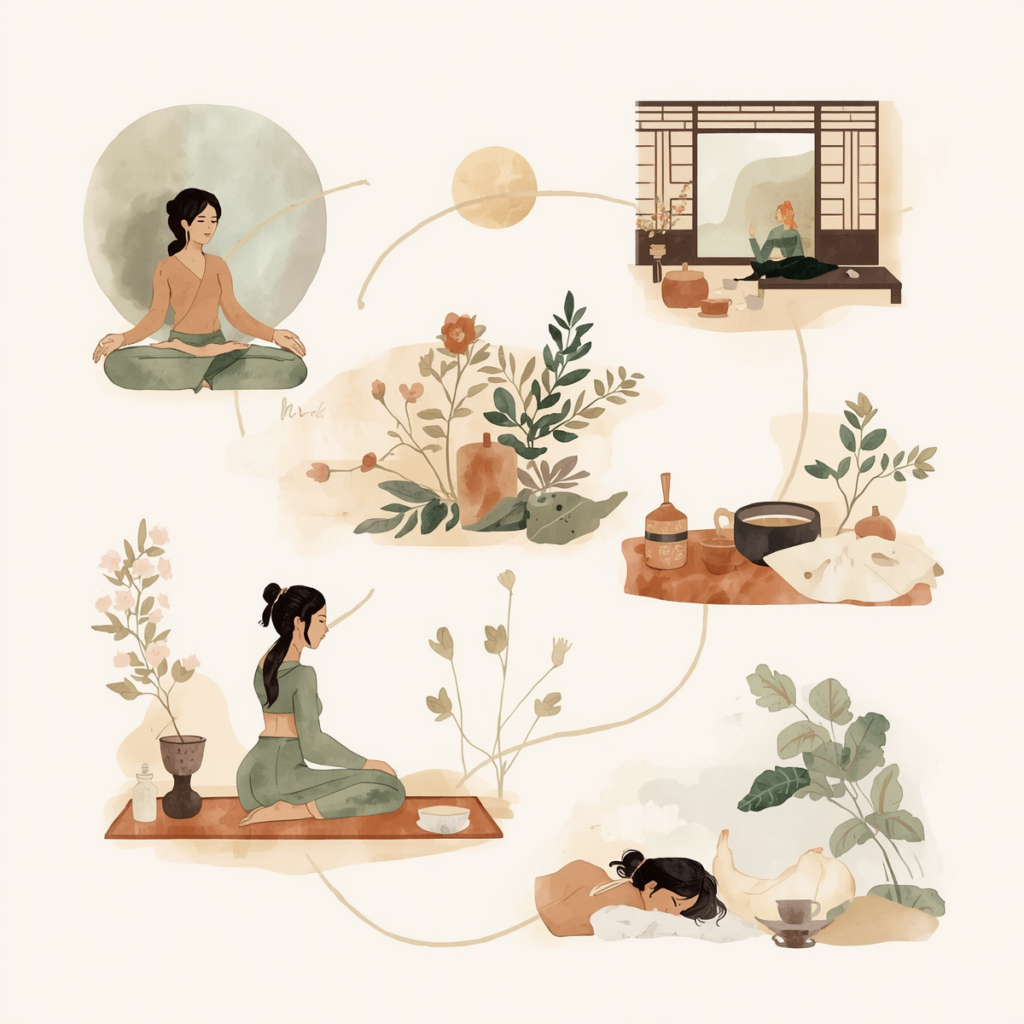
Both Ayurveda and TCM share a culminating wisdom: Lasting weight loss cannot co-exist with fear or self-denial. When you cease battling your body and instead nurture your “Inner Fire,” when you clear the Dampness and metabolic residue, the pounds begin to fall away—naturally, gracefully.
This is not a diet, but a restoration of trust. Every sip of ginger tea, every bowl of yam porridge, is not just nourishment, but a sacred pact of self-respect. This season, let us shed excess with poise, and rediscover our lightest selves through the timeless union of warmth and wisdom.