 admin
admin
From Ancient Meditation to Modern Home Aesthetics
Introduction: A Window to the Infinite
High in the rarefied air of the Himalayas flourishes an art form that transcends mere beauty. Thangka is not simply paint on cloth; it is a sacred cartography of the spiritual journey, a visual scripture bridging the human and the divine. Each Thangka is a portal—an invitation to contemplate compassion, wisdom, and the mysteries of the mind. In this expanded feature, we journey through the thousand-year saga of Thangka art, unravel the geometry of Mandalas, and discover how these timeless masterpieces can infuse modern spaces with meaning and vitality.
1. What is a Thangka? The “Temple on a Scroll”
The word “Thangka” is derived from the Tibetan thang-ka, where thang means “plain surface” and ka means “painting.” At its simplest, a Thangka is a scroll painting rendered on cotton or silk and framed with opulent brocade. But its true significance is far deeper.
In Tibetan Buddhism, a Thangka is a visual encapsulation of the entire Dharma—the teachings of the Buddha. For centuries, especially among nomadic communities, Thangkas served as “portable temples.” Wherever a practitioner traveled, unfurling the scroll transformed any place into a sanctum for meditation. The pigments—often ground from semi-precious stones like lapis lazuli, malachite, cinnabar, and real gold—ensure these works endure for centuries, their brilliance symbolizing the indestructibility of truth.
Fun Fact: Some Thangkas are so large they are displayed only once a year during special festivals and require dozens of monks to unroll them down a monastery wall.
2. A Millennial History: From India to the Roof of the World
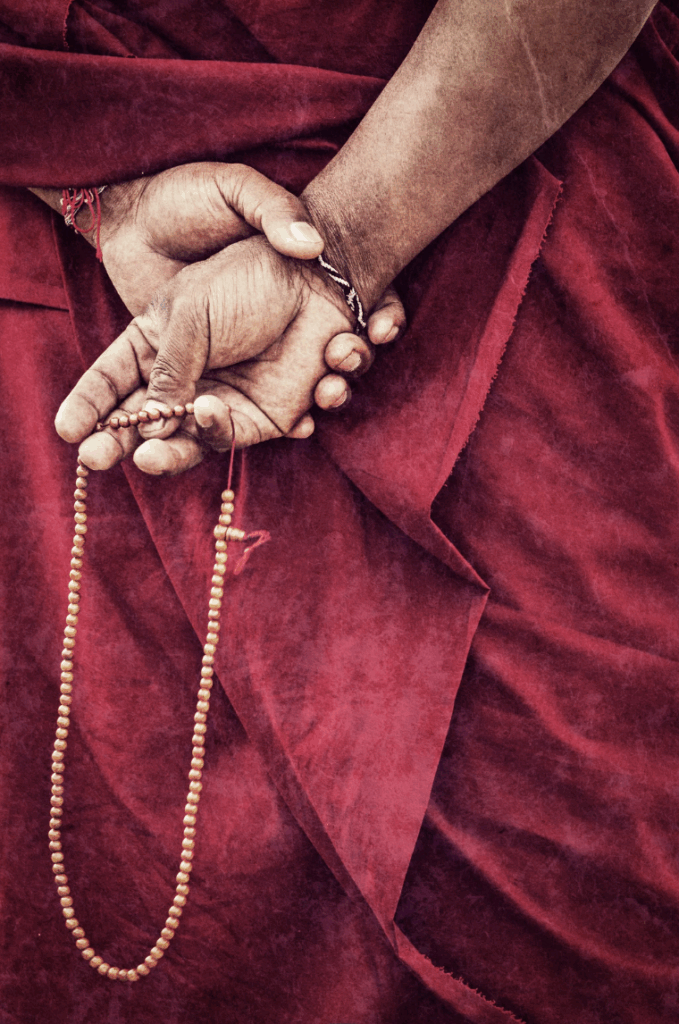
Thangka art emerged in the 7th century, coinciding with the rise of the Tibetan Empire.
- Early Period (7th–9th Century): Buddhism’s arrival in Tibet, particularly through King Songtsen Gampo’s alliances with Chinese and Nepalese royalty, introduced Indian and Newari styles. Early Thangkas fused these influences with indigenous Tibetan elements.
- Development Period (10th–13th Century): As monastic Buddhism flourished, uniquely Tibetan styles crystallized. The “Kyigang” style, with its symmetrical compositions and regal central figures, reflected Nepalese influence yet marked a new Tibetan identity.
- Golden Age (15th–19th Century): The flourishing of Thangka coincided with the emergence of great schools—Menri, Khyentse, and Karma Gadri. Artists synthesized Chinese landscape painting’s ethereal clouds and spatial depth with precise Indian iconography, creating works of breathtaking grace and sophistication.
Fun Fact: The finest Thangkas were often commissioned by royalty or high lamas and could take years to complete, with some containing hidden mantras or relics sewn into their backing for added sanctity.
3. Regional Variations: The Forbidden Beauty of Bhutan
Though united by their sacred function, Thangka styles vary dramatically across the Himalayan world:
- Central Tibet (Lhasa): The Menri school is famed for its fluid contours, refined figures, and harmonious integration of deities with their celestial settings.
- Eastern Tibet (Kham): The Karma Gadri style evokes vastness and tranquility, using delicate, transparent hues and expansive landscapes—a nod to Chinese ink traditions.
- Rebgong (Qinghai): Revered as the “Home of Thangka,” Rebgong artists are renowned for their intricate gold lining (Golek) and meticulous detail, often depicting hundreds of figures in a single composition.
- Bhutan: The Rarest Treasure: Bhutanese Thangkas are fiercely protected as national treasures. Strict laws prohibit the export of antique works, and even contemporary pieces are reserved for monastic or royal use. Bhutanese Thangkas stand out for their bold contrasts and vibrant colors, largely untouched by commercialization. To own a genuine Bhutanese Thangka is considered a sign of immense karmic merit.
Fun Fact: In Bhutan, Thangkas are central to public festivals called “Tshechu,” where monumental scrolls called “Thongdrel” are displayed at dawn, believed to bless all who view them.
4. The Sacred Geometry: Understanding the Mandala
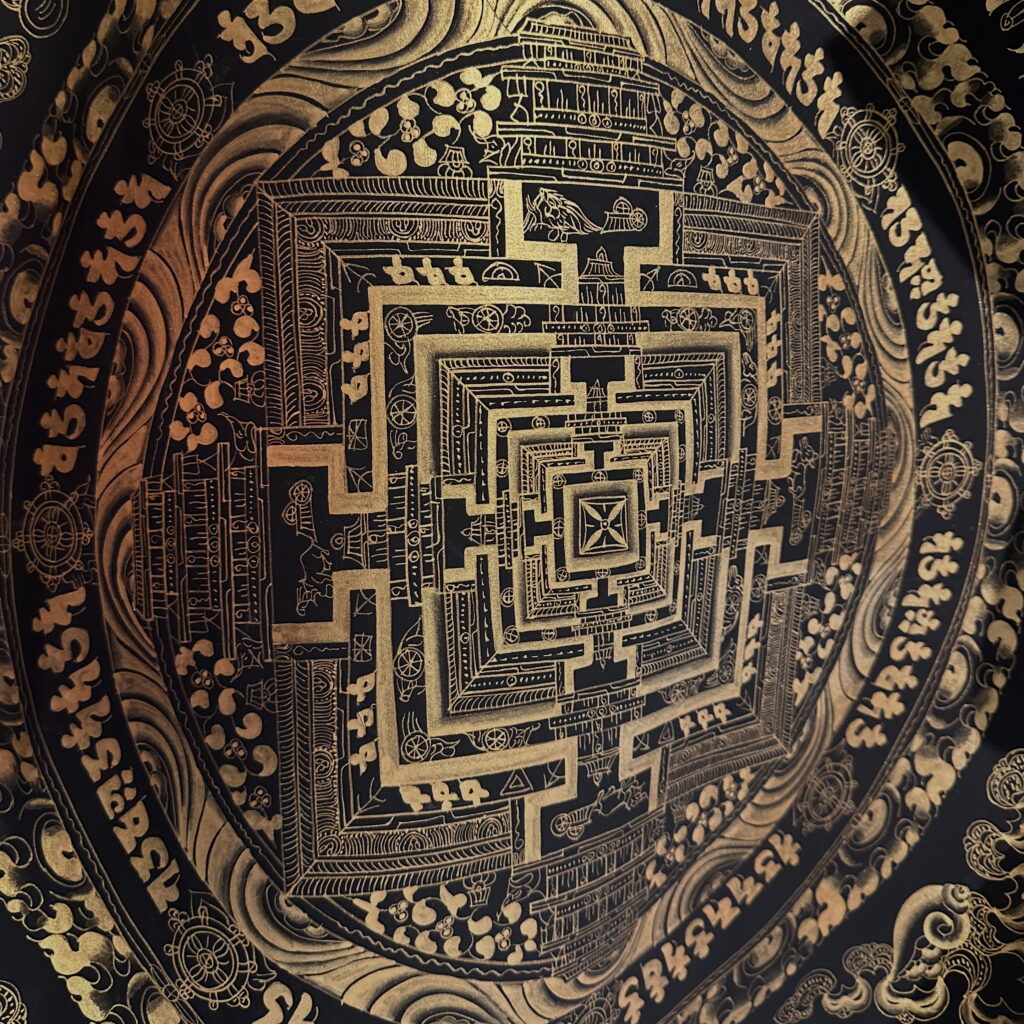
One of Thangka art’s deepest expressions is the Mandala (Tibetan: Kyilkhor), a cosmic diagram representing the universe and the enlightened mind.
- Structure: Mandalas are meticulously constructed with a circle within a square. The outer rings of fire symbolize purification and protection, while the nested gates guide the practitioner inward, toward the deity in the center. Every line, shape, and color is laden with symbolic meaning.
- Purpose: In meditation, the Mandala is a visual aid for “deity yoga”—the practitioner mentally enters the Mandala, journeying from the chaos of the outer world to the serene center, merging with the enlightened presence at its heart.
Fun Fact: Creating a sand Mandala can take weeks or even months, only to be swept away in a ritual act of impermanence, reminding us of life’s fleeting nature.
5. Thangka and Feng Shui: Harmonizing Space and Energy
In the context of modern interiors, a Thangka is more than an artwork; it is a spiritual anchor. From a Feng Shui perspective:
- Five Element Balance: The mineral pigments embody the earth element. Blue Thangkas can soothe restless energy (Water), while red ones invigorate passion and fame (Fire).
- Clearing Negative Energy: Wrathful protector deities (such as Mahakala) are often placed near entrances to dispel negative influences and “Sha Qi” (harmful energy).
- Attracting Abundance: Placing wealth deities in the “Wealth Corner” (furthest left from the entrance) is thought to draw prosperity, both material and spiritual, into the home.
Fun Fact: In Tibet, it is considered auspicious to rotate Thangkas according to the lunar calendar, aligning their energy with natural cycles.
6. The Stories of Four Deities: Compassion, Power, and Wealth
To truly appreciate a Thangka, one must understand the stories and symbolism woven into each deity’s image.
I. Green Tara: The Tear of Compassion
Legend holds that Avalokiteshvara, the Buddha of Compassion, wept upon witnessing the world’s suffering. From his tears bloomed a lotus, from which Green Tara emerged, vowing: “I shall be the one to help you cross the ocean of sorrow.”
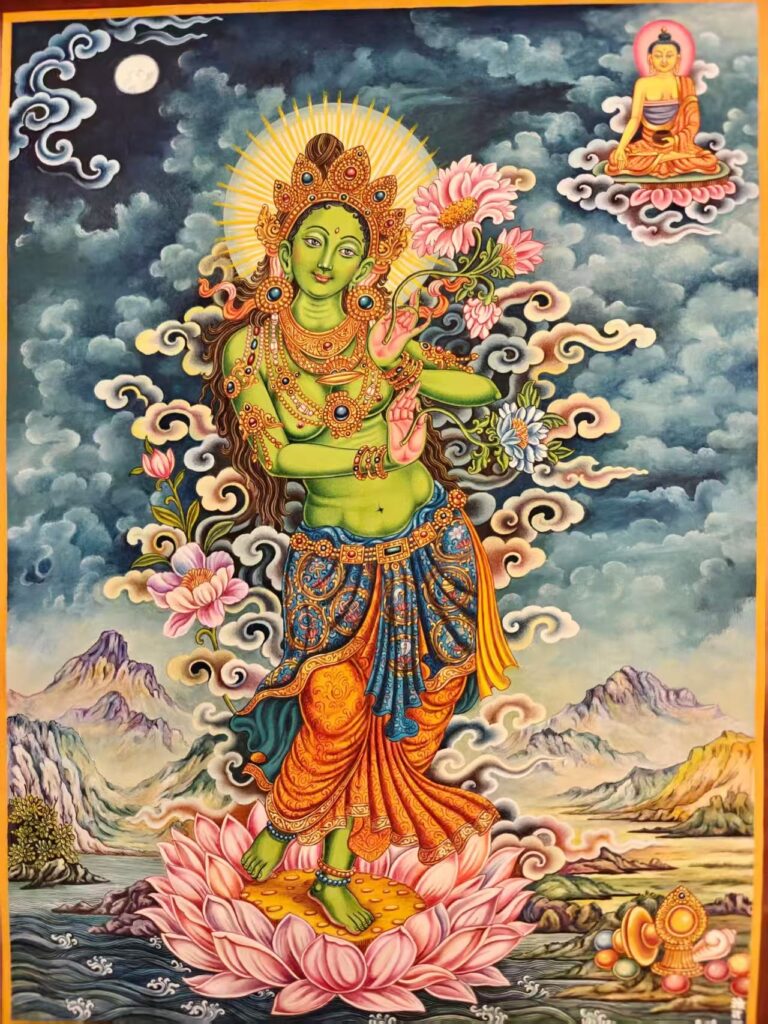
- Symbolism: Seated with one leg extended, ever-ready to act, Green Tara is the “Mother of Liberation,” shielding devotees from the eight great fears.
Fun Fact: There are 21 forms of Tara, each with her own color and power; Green Tara is swiftest to respond to prayers.
II. Vaisravana (Wealth Heavenly King): The Guardian of the North
Vaisravana is both a protector and a bestower of fortune, residing in a golden palace atop the northern slopes of Mount Meru. He is one of Buddhism’s Four Heavenly Kings.
- Symbolism: He wields a victory banner and a mongoose that spits jewels—symbolizing the triumph over greed and the generosity of spirit necessary for spiritual progress.
Fun Fact: Vaisravana is also revered in East Asian cultures as Bishamonten or Tamonten, a guardian of warriors and temples.
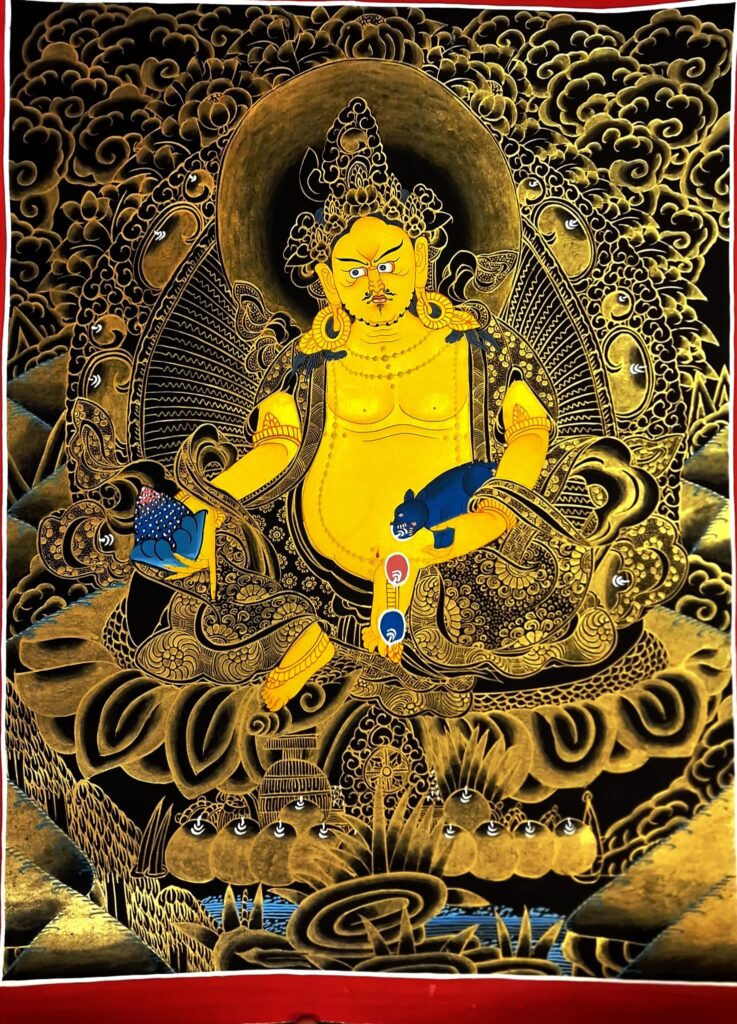
III. Yellow Jambhala: The Protector of the Impoverished
During the Buddha’s teachings at Vulture Peak, demons tried to crush him with rocks. Yellow Jambhala appeared, shielding the Buddha and vowing to relieve all beings of poverty so they might pursue spiritual practice unhindered.
- Symbolism: His ample belly represents abundance; his presence reminds us that wealth is a means to benefit others, not an end in itself.
Fun Fact: Devotees often pour water over Jambhala statues, echoing the tradition of the Buddha himself blessing the deity with water.
IV. Vajrasattva: The Great Purifier
Vajrasattva embodies primordial purity and is invoked in rituals of confession and cleansing. Known as the “Prince of the Buddhas,” he radiates white light, dissolving karmic obstacles.
- The Story: Through the “Hundred Syllable Mantra,” practitioners visualize nectar streaming from Vajrasattva, purifying body, speech, and mind, restoring the soul’s original clarity.
Fun Fact: Advanced Thangka artists sometimes paint Vajrasattva with a single, unbroken brushstroke for the outline—a testament to meditative focus and skill.
7. Curated Selections from Our Marketplace
Each Thangka in our collection is selected for its spiritual resonance, artistic mastery, and authentic lineage.
7.1 50cm Tibetan Manjushri Bodhisattva Thangka
Manjushri, the Bodhisattva of Transcendent Wisdom, brandishes the Flaming Sword to cut through ignorance. This 50cm Thangka radiates clarity and transformative insight.
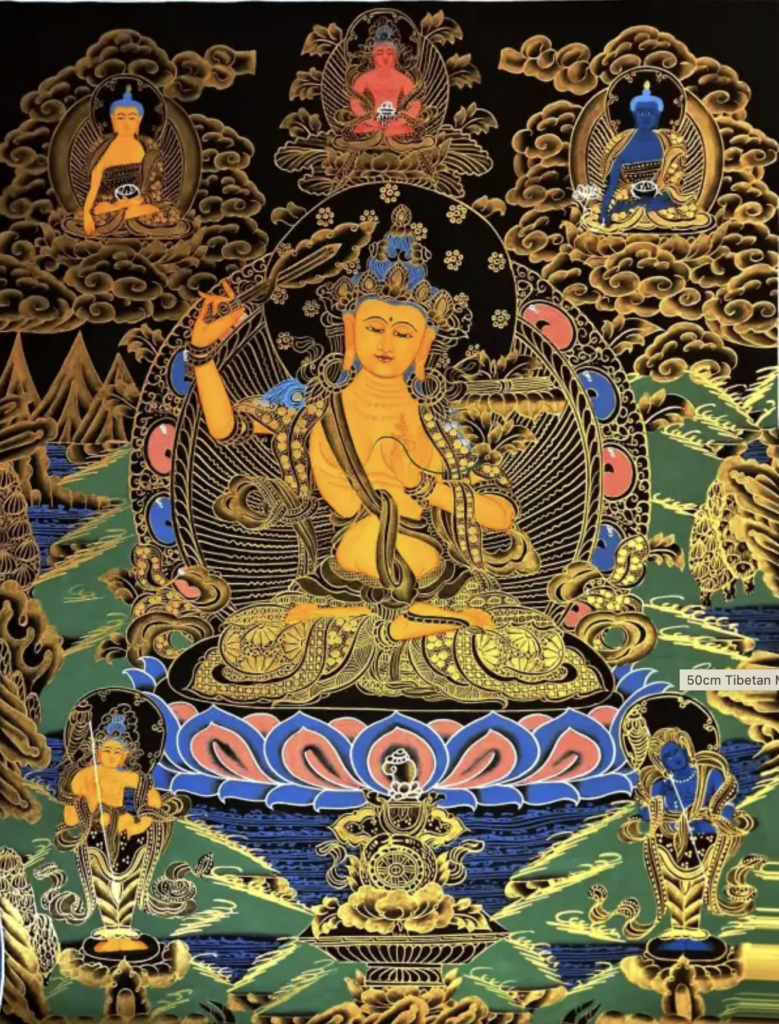
- Best for: Students, writers, and leaders seeking mental acuity and discernment.
7.2 Tibetan Thangka of Yellow Jambhala
This splendid depiction of the Wealth God features exquisite gold lining, emphasizing his benevolent power to manifest abundance.
- Best for: Offices and businesses wishing to attract prosperity and remove obstacles to success.
7.3 The Power of Serenity | 54cm Lotus Om Thangka
A Black Gold (Nag-thang) masterpiece: the primordial “Om” syllable glows at the lotus heart, radiating calm and spiritual gravity.
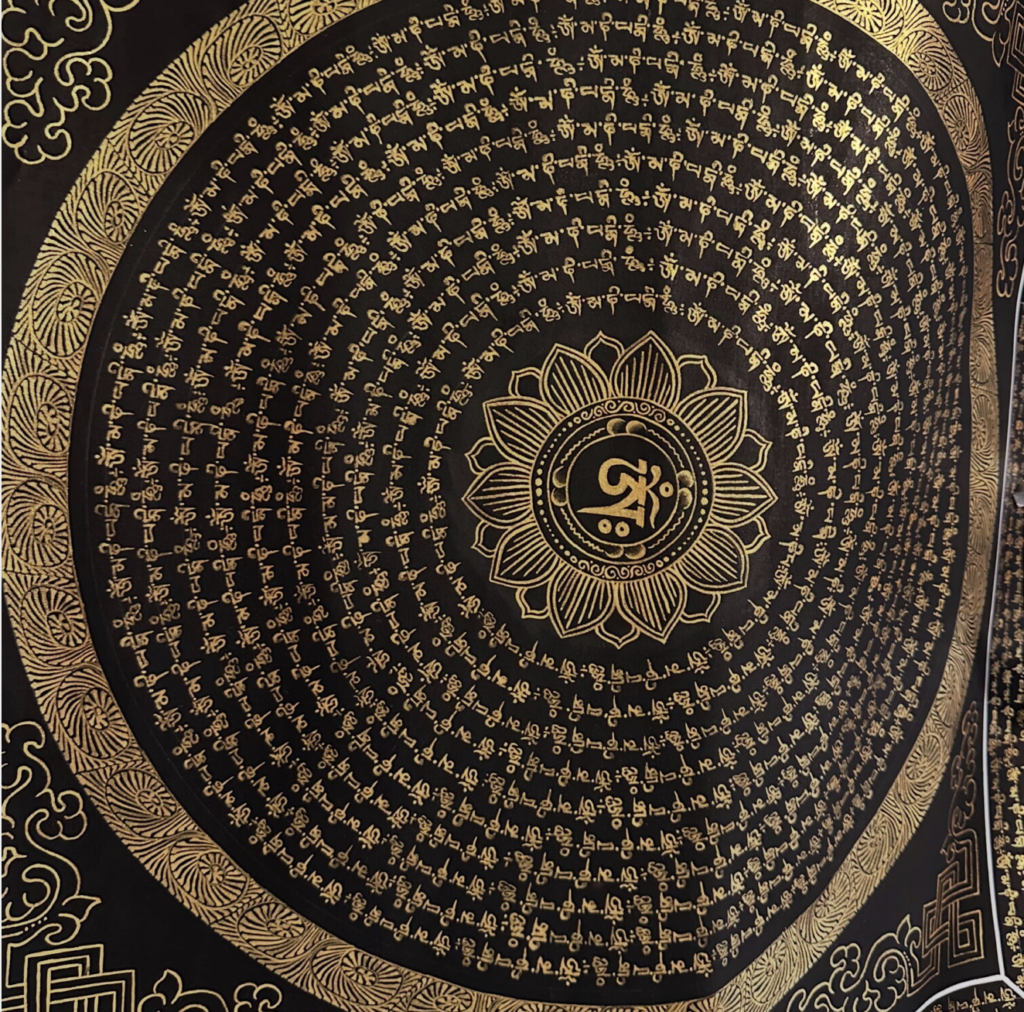
- Best for: Meditation spaces and bedrooms; its deep, minimalist palette grounds energy and fosters serenity.
Fun Fact: Black Gold Thangkas were traditionally reserved for high lamas and tantric practitioners due to their powerful symbolism.
8. The Art of “Inviting” a Thangka
In Tibetan tradition, one does not simply “purchase” a Thangka; one invites it into one’s life. This act is a spiritual commitment—an agreement to honor the presence and teachings depicted on the canvas.
When selecting a Thangka, trust your intuition: Which deity gazes back at you? Which color resonates with your journey? Once welcomed into your home, place the Thangka in a clean, elevated place, treating it as a living embodiment of wisdom and compassion.
A Thangka is not just art. It is a companion on your journey—a wellspring of inspiration, clarity, and peace. May your own journey with Thangka art be blessed with insight, abundance, and boundless joy.
Fun Fact: Before painting, traditional artists perform purification rituals and offer prayers to ensure that the Thangka becomes a true vessel of sacred energy.
Join our WhatsApp Channels:
在情緒的兩極間,找回真實活著的勇氣:關於「成長」的另一種解讀
The Anatomy of Elegance: Deciphering the Historical Codes of British Headwear and Formal Attire