henry
henry
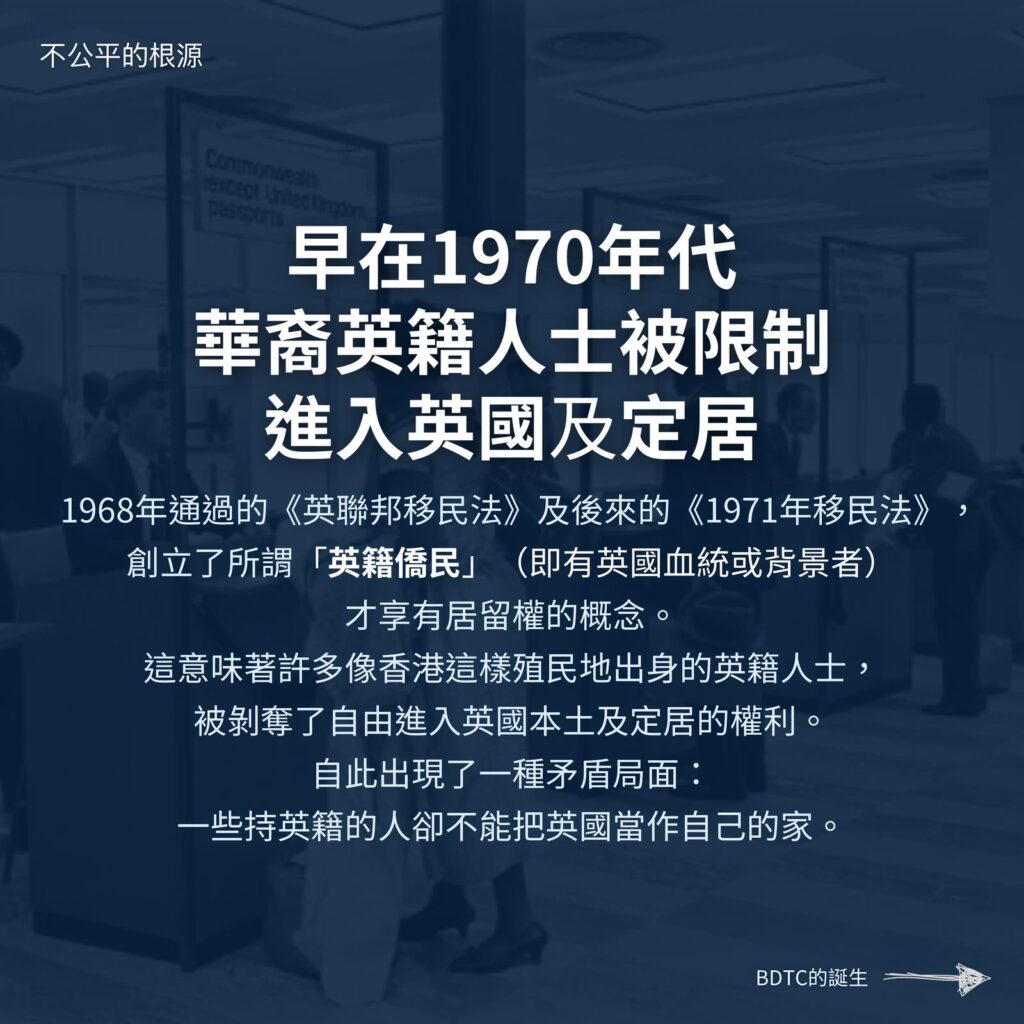
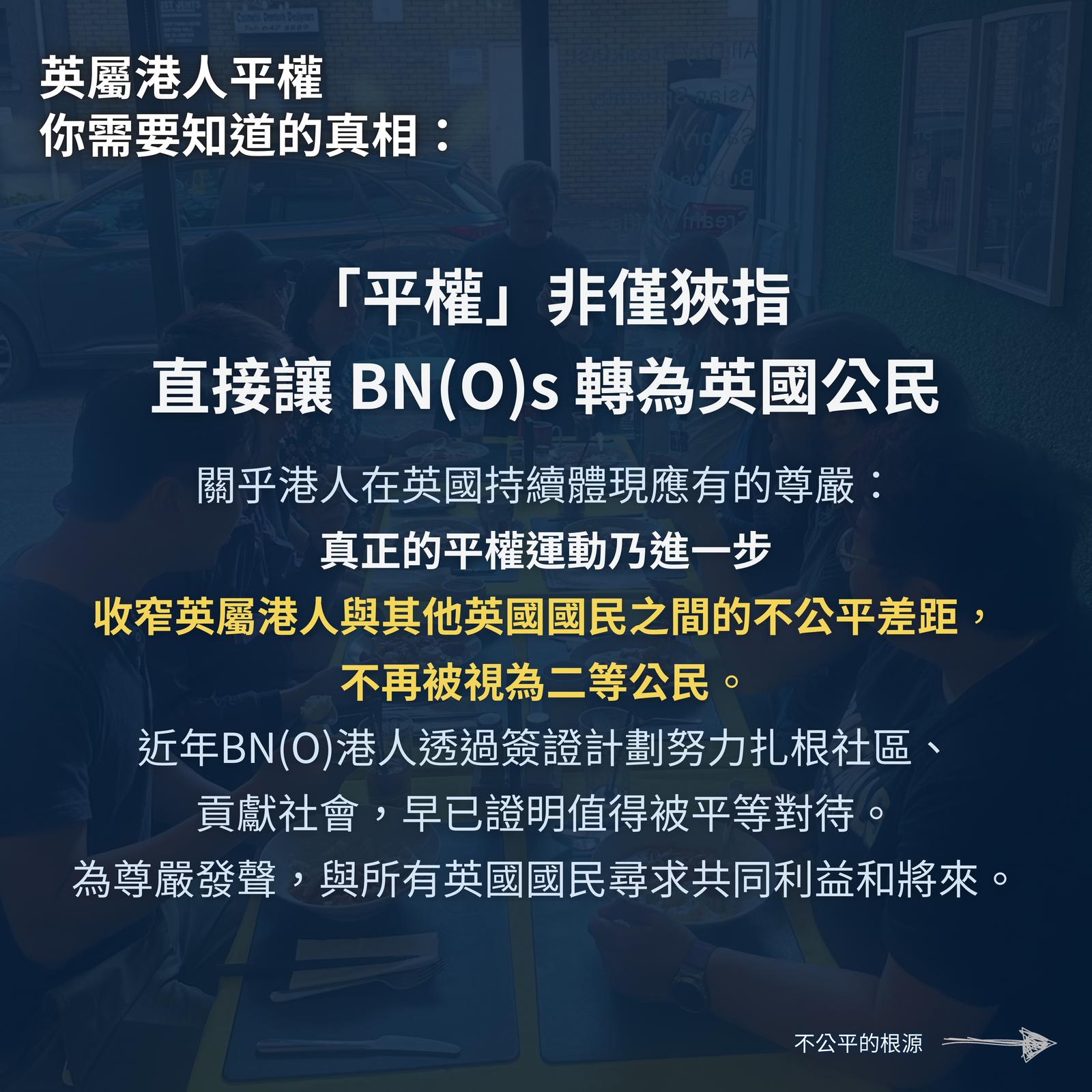


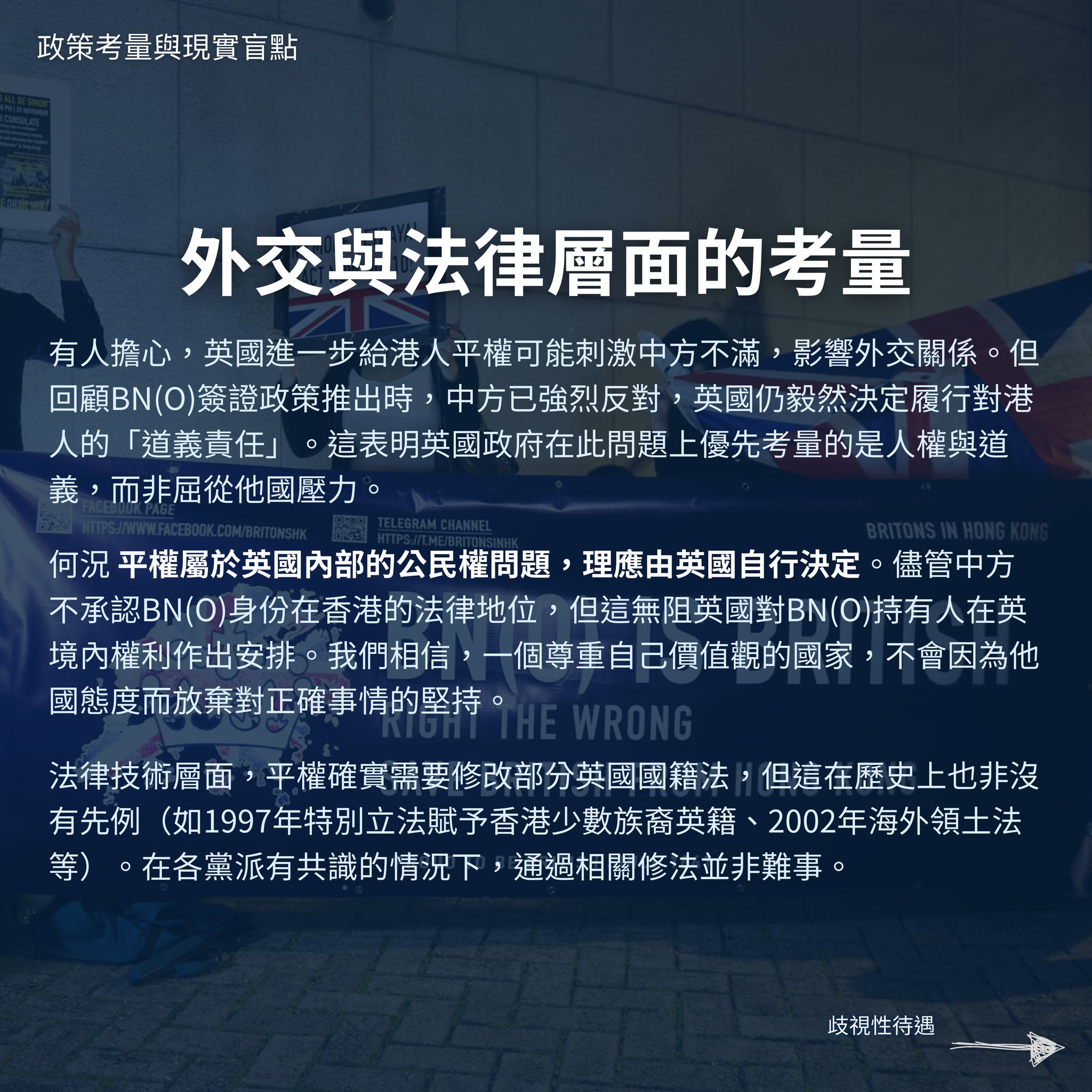


Having recently engaged in the BNO equality advocacy, I have been profoundly affected by the process, which encompassed a spectrum of activities from meticulous flyer design to the diverse public reactions, thereby rendering the journey simultaneously enthusiastic and fraught with manifold challenges.
Initially, I wish to express my profound gratitude to Scottish Hong Kongers for their exemplary and meticulous flyer design, which articulately elucidated the historical context of the BNO and exemplified the group’s unwavering dedication and professionalism. Moreover, the involvement of Britons in Hong Kong is equally commendable; this segment, predominantly composed of Hong Kongers who harbored sentiments for Hong Kong’s future prior to 1997 and concentrated early on the BNO issue, has largely seen its veterans retreat into obscurity, yet their enduring spirit and accumulated experience remain profoundly consequential for the ongoing pursuit of equality.
Historically, media outlets have seldom concentrated on issues of equality. While, post-1997, a cadre of perceptive advocates persistently championed BNO rights, their efforts were frequently met with sardonic dismissals such as “the British won’t care about you,” thereby relegating their activism to the realm of the overlooked. It was not until the 2014 Occupy Central movement—during which Ma Chun-long staged a prolonged protest outside the British Consulate—that a nascent generation’s consciousness was galvanised towards BNO entitlements; nonetheless, at that juncture, prevailing mainstream opinion still deemed seeking assistance from the United Kingdom to be an exercise in futility.
The advent of the BNO Visa, inaugurated by the United Kingdom subsequent to the 2019 anti-extradition protests, markedly intensified public apprehension regarding the restitutive rights associated with BNO status; concurrently, Hong Kong residents progressively came to the realization that, as a former sovereign entity, the UK bore a recognized duty and capacity to lend assistance to Hong Kong, thereby fostering a sense of existential obligation.
Nevertheless, political discourse diverges markedly from the conviviality of a dinner party; when engaging with Scottish Hongkongers on contentious issues, the most formidable challenge was not the government’s stereotypical responses—already anticipated and thus foreseeable—but rather the unpredictable reactions of the general populace, whom we colloquially refer to as “street customers.” Their degree of comprehension regarding the matters at hand exhibited considerable variability, and their demands often bordered on the exorbitant and fantastical, rendering them exceedingly arduous to address with straightforward responses.
The unpredictability of “street customers'” reactions can be attributed to their comparatively limited familiarity with the intricacies of the issues at hand, which consequently renders the matters they champion frequently transcend pragmatic reality.
In the realm of political ideologies, the extremities of the left and right, despite their ostensibly opposing principles, ultimately converge upon a similar endpoint; although Hong Kong residents might lack a comprehensive comprehension of these ideological distinctions, their words and actions ostensibly betray their underlying inclinations. Throughout this period, I have encountered a plethora of individuals, some of whose conduct has been exceptionally perplexing and astonishing.
Although remaining ignored was anticipated, the act of suppression came as an unforeseen development. Some individuals contended that their opposition was rooted in concerns that such measures might impede the accessibility of the Mandatory Provident Fund (MPF), while others opposed codifying the BNO Visa into law, asserting that it could hinder policy liberalization. While grievances against the latter are comprehensible—given that I myself do not endorse every issue unconditionally—their reservations are understandable.
Nevertheless, subsequently, an entity disseminated conjectures alleging that we were inciting fissures within the community; moreover, they dispatched correspondence to assorted regulatory agencies, maligning my reputation and that of the organizations I represent, even resorting to the fabrication of falsehoods in an ineffectual attempt to tarnish my credibility. At this juncture, I was compelled to recognize, in accordance with sociological paradigms, that the extremities of the political continuum frequently mirror each other’s conduct.
However, what underscored the urgent necessity for ideological enlightenment among Hong Kong’s populace was the issue concerning petitioning practices; whereas previously, residents fiercely denounced electoral malpractices, there now emerges an overt propensity to endorse the establishment of multiple accounts for petition activities across various group sizes—an inclination which renders indistinguishable from the strategies employed by the pro-establishment factions.
What renders the situation even more alarming is that, upon asserting that individuals possessing analytical acumen would likely abstain from endorsing this petition, I inadvertently incited a series of condemnatory reactions. Although my aim was to exhort the public to adopt a multifaceted perspective, my subsequent attempt to elucidate this intent was met with a conspicuous absence of serious engagement.
On the same day, various WhatsApp groups became embroiled in conflicts stemming from individuals’ attempts to prohibit certain comments, which led me to the realization that many Hong Kongers lack an understanding of the adage “If you don’t like it, don’t watch it”; instead, they seemingly favor the uniformity of a thousand voices echoing the same sentiment over the toleration of a thousand unique personalities expressing diverse viewpoints.
Perhaps the most apprehensive aspect of Hong Kong’s educational paradigm is its propensity to suppress independent thought; from an early age through adulthood, both the scholastic institution and parental figures tend to prioritize the conformity of attire—such as the tidiness of school uniforms—as an indicator of institutional integrity, which is often erroneously conflated with academic excellence. Even trivial deviations, like an inconsistency in the hue of a hair tie, are interpreted as acts of nonconformity. The entire edifice of the educational and socialization system is grounded in the imperative to appease authority figures and garner societal validation, thereby fostering an environment where authentic self-expression is often deemed unacceptable. Consequently, the pursuit of societal approval has emerged not only as a survival mechanism but also as the principal metric of achievement, rooted in the pervasive misconception that individual uniqueness is inherently detrimental to societal harmony.
While embracing one’s individuality is commendable, the fear of being seen as inadequate often outweighs such acceptance; regardless of their abilities, people naturally want to present an impeccable image to others.
The intricate composition of this cultural fabric has emerged as a formidable impediment to effective political advocacy, primarily stemming from a deficiency in early-stage education that fosters independent and critical thinking, coupled with an inadequate civic education. The developmental trajectory of individuals has been singularly oriented toward utilitarian pursuits—excel in academic endeavors, gain admission to prestigious universities, amass substantial wealth, marry, and reproduce—culminating in a state of stagnation wherein profound contemplation of life’s intrinsic values is conspicuously absent. Even more disconcerting is the tendency of such an educational paradigm to engender an unchecked magnification of self, whilst concurrently neglecting the broader contextual framework. For instance, following an attempt to maliciously defame me, certain organizations paradoxically sought my assistance; conversely, others reveled in my vilification, hastily disseminating the news, only to subsequently solicit donations. This behavior largely emanates from the mistaken conviction that the Hong Kong diaspora in the United Kingdom must dependencies upon their organization. There are even instances where individuals have lambasted my personal remarks, claiming possession of a pre-1968 birth certificate that could facilitate judicial review, yet subsequently refusing to furnish it. A deeper, more nuanced reflection from a macro perspective would reveal that the decision regarding the provision of such documentation bears significance primarily for the public interest, rather than for personal convenience.
The inception of a democratic society is profoundly contingent upon the cognitive caliber of its populace; to demonstrate on the global stage that citizens possess the requisite intellectual capacities to discern and espouse perspectives that serve the collective good, thereby enabling them to judiciously employ their voting rights in selecting individuals and policies genuinely advantageous to themselves and the community at large. Mastery of the effective utilization of free speech does not infringe upon the liberty of others, as personal freedom should not be compromised. Consequently, the ensuing discourse will invoke three scholarly theoretical frameworks to elucidate the manner in which the qualitative attributes of the populace influence the fabric of democracy..
It is conceivable that any individual could swiftly ascend to the position of a dictator if vigilance is not maintained, given that binary opposition constitutes the most facile cognitive framework for human cognition and concurrently functions as an effective psychological defense mechanism; insofar as dissenters are merely classified, there arises no necessity to confront the dissonance between one’s aspirational self and one’s authentic self.
Cognitive Dissonance Theory, initially articulated by the distinguished American social psychologist Leon Festinger, elucidates the profound psychological perturbation engendered when an individual’s behavior—such as active participation in the BNO equality movement—clashes with their fundamental intrinsic ideals, such as the relentless pursuit of equity and justice; in an ostensible effort to mitigate this dissonance, such individuals often engage in the recalibration of their internal belief systems to align congruently with their enacted behaviors. For example, even when harboring clandestine reservations, an individual might publicly endorse a petition and subsequently amplify their positive evaluation of it—potentially disparaging dissenters—in a subconscious attempt to rationalize their stance and thereby assuage the distress concomitant with dissonance. Furthermore, this theoretical framework explicates the vehement backlash elicited when I exhorted the public to adopt nuanced perspectives, as such admonitions threatened to destabilize their deeply entrenched cognitive schemas, meticulously crafted to attenuate dissonance.
Hence, the concept of equality functions as a form of civic education, initially serving as a dialectical synthesis of historical trajectories and notions of justice, subsequently facilitating the development of individual and collective identities, and ultimately fostering the pursuit of the most advantageous solutions for the greatest number.
Pareto optimality, a pivotal concept within economic theory, delineates a hypothetical apex of resource distribution wherein any attempt to enhance the welfare of one individual invariably results in the detriment of another, thereby rendering it an optimal equilibrium state. Within the framework of BNO equality, the aspiration for an ostensibly ‘optimal’ solution does not inherently imply the universal satisfaction of all stakeholders; rather, it entails the identification of a policy or strategy that endeavor to maximize aggregate well-being whilst judiciously considering the diverse interests and inherent constraints of all involved entities. This necessitates a meticulous and objective evaluation of the prospective ramifications associated with various alternatives, followed by a judicious calculus weighing the merits against the drawbacks. For instance, although the implementation of the BNO Visa has ostensibly offered an escape route for certain Hong Kongers, its benefits are not universally accessible to all BNO holders, and paradoxically, it may engender new predicaments for certain groups. Consequently, the ongoing pursuit of equality progressively endeavors to approximate a state of Pareto optimality, aspiring to ameliorate conditions across the spectrum without impinging upon the interests of any particular faction. Social Contract Theory, a foundational tenet of political philosophy, posits that the legitimacy of governmental authority originates from the consent of the governed, who voluntarily relinquish certain rights in exchange for protection and order; within this framework, the BNO equality movement can be interpreted as an ongoing renegotiation of the social contract between Hong Kongers and the British government, driven by historical antecedents and contemporary exigencies that compel Hong Kong residents to demand an augmentation of BNO privileges and to invoke the British government’s obligation to safeguard their interests. The response of the British authorities, in turn, ostensibly mirrors their interpretation and calibration of this social contract; failure to substantively address these demands risks inciting social unrest and potentially undermining the government’s legitimacy. Moreover, mechanisms such as petitions serve as vital channels for Hong Kongers to articulate their aspirations and partake in the recalibration of this social contract; nonetheless, when such petitions devolve into manipulative practices akin to electoral rigging, they threaten to distort public opinion and pervert the foundational principles underpinning social contract legitimacy.
In essence, the journey toward achieving BNO parity is characterized by a protracted and arduous process that mandates not only relentless advocacy and persistent exertion but also necessitates a heightened caliber of civic virtue within the Hong Kong populace—specifically, the capacity for independent thought, rational discourse, and a holistic understanding of the broader societal context—thereby enabling them to secure maximal rights and benefits amidst a battleground of competing interests and to forge a more equitable and cogent social contractual framework.

Chinese Version : BNO 平權之路 – 在人民質素的荊棘中前行
📢 Join the “UK Life & Current Affairs Channel” (DOVC.co.uk) Community! 🇬🇧
👋 Want to stay up-to-date on the latest UK life information, news, current affairs, policy changes, or share experiences with fellow Brits? Welcome to join the UK Life & Current Affairs Channel (DOVC.co.uk) to discuss and share useful information together!
📌 Community Features: ✅ Real-time updates on UK current affairs and policies ✅ Exchange of information on UK life, immigration, work, study, etc. ✅ Mutual support with like-minded friends
📲 Join us now!
🔹 WhatsApp Group 👉 Click here to join 🔹 Facebook Fan Page 👉 Follow us
Welcome to join us and explore UK life together! 🎉

Henry Wong qualified as a solicitor in Hong Kong, England and Wales, Ireland and Scotland respective in 2014, 2018, 2024 and 2025. Henry is fluent in Cantonese, Mandarin, English, and Japanese, and he specialises in a broad range of legal matters, including family law (possessing significant experience in divorce, assets division, and child arrangements), criminal litigation, civil litigation, and international law, with a focus on human rights and criminal law. He additionally manages various immigration-related matters, encompassing refugee applications, settlement and naturalisation applications, work visa applications, and actively conducts BNO settlement and naturalisation seminars in the UK to provide professional information to communities in need.
Henry Wong is dedicated to public welfare and community affairs. He is currently the founder of Hong Kong Professionals CIC (hkpcic.org.uk) and Descendants of Victoria City (dovc.co.uk), where he actively participates in community building and consistently advocates for various human rights issues.
At present, Henry serves as a consultant solicitor for David Fenn & Co. in Hong Kong and Perilli & Ho Solicitors in London. He is also a legal link partner with Jones Whyte Solicitors in Scotland. His practice area is extensive, encompassing the sale and purchase of residential and commercial properties in both Hong Kong and the United Kingdom, immigration matters, various civil and criminal litigation cases, commercial and contractual matters, family disputes, wills and estate administration, as well as human rights law.
Outside of his professional commitments, Henry Wong enjoys sports and is a goalkeeper for an amateur football team. He also possesses a passion for wine, possesses a deep understanding of various types of alcoholic beverages, and is skilled in making cocktail.
黃律師於2014年成為香港執業律師,2018年取得英格蘭及威爾斯執業律師資格,2024年取得愛爾蘭註冊律師資格,並於2025年獲得蘇格蘭律師資格。黃律師精通廣東話、普通話、英語及日語,擅長處理多項法律事務,包括家事法(尤其於離婚、財產分配及子女撫養權安排方面經驗豐富)、刑事訴訟、民事訴訟,以及國際法(專注於人權及刑事領域)。此外,黃律師亦處理各類移民相關事宜,包括難民申請、定居及入籍申請、工作簽證申請等,並積極於英國舉辦BNO定居及入籍講座,為有需要的社群提供專業資訊。
黃律師熱心公益及地區事務,現為 Hong Kong Professionals CIC (hkpcic.org.uk) 及 Descendants of Victoria City (dovc.co.uk) 的創辦人,積極參與社區建設,並對不同人權議題持續發聲。
目前,黃律師擔任香港 David Fenn and Co. 律師行及英國 Perilli & Ho Solicitors 律師行的顧問律師,同時也是蘇格蘭 Jones Whyte Solicitors 的合作夥伴。其執業範圍廣泛,涵蓋香港及英國住宅及商業物業買賣、移民入境事務、各類民事及刑事訴訟、商業及合約事宜、家庭糾紛、遺囑及遺產處理,以及人權法等。
工作之餘,黃律師熱愛運動,擔任業餘足球隊的守門員。同時,他也對品酒情有獨鍾,對各類酒品均有深入研究,更擅長調製各式雞尾酒。