 DOVC
DOVC
In the realm of psychology, the phenomenon of interpersonal attraction emerges as a profoundly intriguing domain of study, underpinned by the pivotal theory that individuals tend to feel more spontaneously drawn to those who exhibit a higher degree of similarity to themselves—an effect academically termed the “Similarity-Attraction” dynamic. This phenomenon can be elucidated by the notion that individuals subconsciously gravitate toward others who share analogous traits, core values, ideological beliefs, pursuits, and even racial or cultural backgrounds, as such congruencies serve to bolster self-affirmation, diminish communicative friction, and engender a communal sense of belonging.

Consequently, the question arises: why does genuine societal integration remain so elusive for immigrants in foreign nations? It may not solely be attributable to overt discrimination; rather, a fundamental barrier may stem from a deficiency in shared characteristics—be they historical memory, culinary preferences, experiential backgrounds, language fluency, or even phenotypic racial markers—that inhibit mutual understanding and foster invisible barriers to assimilation.
Since antiquity, establishing oneself meaningfully in an unfamiliar land has been an arduous endeavor, which historically underpins the societal valorization of “returning in glory.” The absence of established connections or prior experience mandates that newcomers embark on an arduous process of learning and adaptation akin to that of an infant—where even a modicum of complacency or hubris can precipitate numerous setbacks, obstructing the path to socio-economic foothold.
Within our perception, the term “Local Chinese-British” refers predominantly to the antecedent generation who, having emigrated from our familiar homeland across expansive maritime distances, settled and entrenched themselves within the United Kingdom—most typically arriving at a tender age; many, by now, exceeding seventy years in age, despite not having reached eighty.
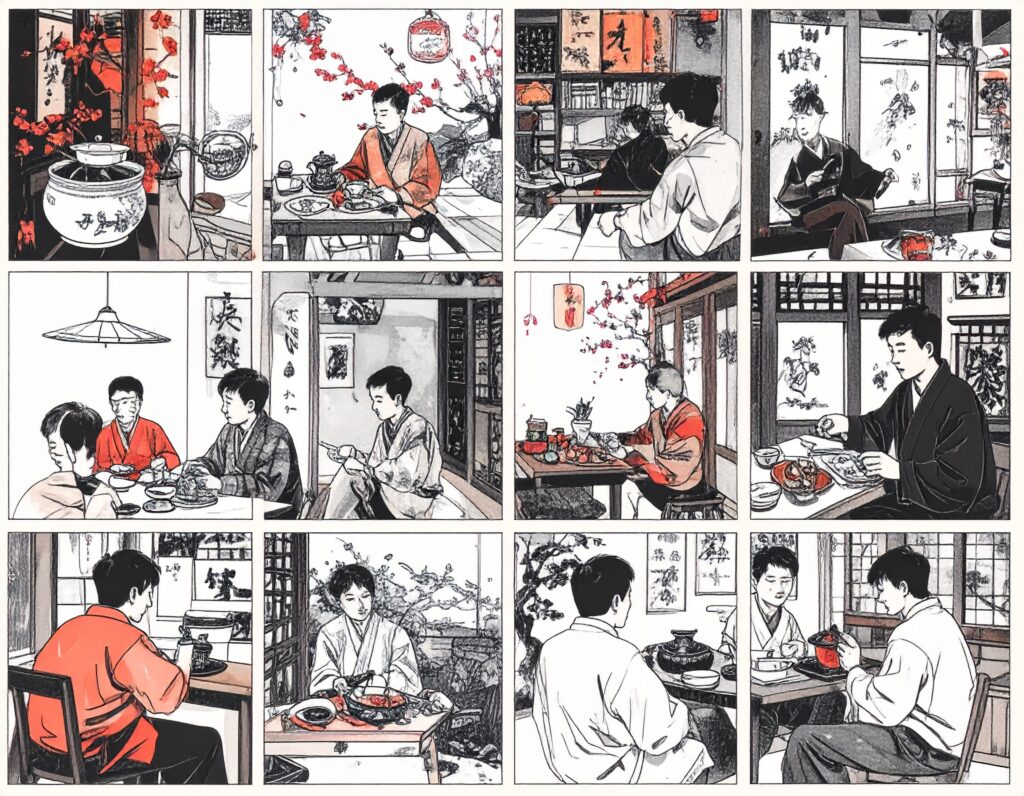
By logical inference, in a foreign context, these “Local Chinese-British” should constitute the demographic most psychologically akin to us, sharing racial attributes, a collective national historical consciousness, and linguistic capabilities. Yet, somewhat paradoxically, these individuals have paradoxically become the most disparaged—albeit subtly—among numerous BNO visa holders.

Informal statistics suggest that many individuals within the BNO immigrant cohort colloquially refer to Hong Kong residents who settled in the UK before 2021 as “Local Chinese-British.” However, a subset of those who migrated during the 1980s through 2019—whether for study, employment, or matrimony—have historically been overlooked, primarily because they do not identify as “Local Chinese-British,” a stance rooted not merely in their relative youth but more profoundly in their self-perceived identity as Hong Kongers.
Unfazed by the apparent animosity emanating from certain BNO migrants, these individuals seem to maintain a commendable nonchalance, prompting us to initiate this series of reports wherein we aim to engage these “New. Local Chinese-British,” listening attentively to their perspectives. When we refer to BNO immigrants as “Hong Kongers,” they concur—affirming themselves as “also Hong Kongers.” When queried about an appropriate designation for themselves in this context, a consensus emerges: since BNO migrants are dubbed “New Hong Kongers,” they prefer to be recognized as “New. Local Chinese-British.”

Indeed, the arduous journey traversed by the BNO cohort was undertaken earlier by these individuals, whose resilience, unwavering determination, and pragmatic disposition have enabled them to carve out niches across various sectors within the UK. They endure no ill will towards their return to Hong Kong, having invested not only substantial financial resources but also having surmounted numerous hardships to earn recognition in a foreign land—a commitment that has fortified their resolve to establish roots in Britain.

Chinese Version: 新.老華僑 ——心理吸引力、身份認同與移英港人的多重面貌
📢 Join the “UK Life & Current Affairs Channel” (DOVC.co.uk) Community! 🇬🇧
👋 Want to stay up-to-date on the latest UK life information, news, current affairs, policy changes, or share experiences with fellow Brits? Welcome to join the UK Life & Current Affairs Channel (DOVC.co.uk) to discuss and share useful information together!
📌 Community Features: ✅ Real-time updates on UK current affairs and policies ✅ Exchange of information on UK life, immigration, work, study, etc. ✅ Mutual support with like-minded friends
📲 Join us now!
🔹 WhatsApp Group 👉 Click here to join 🔹 Facebook Fan Page 👉 Follow us
Welcome to join us and explore UK life together! 🎉


 meritokratias